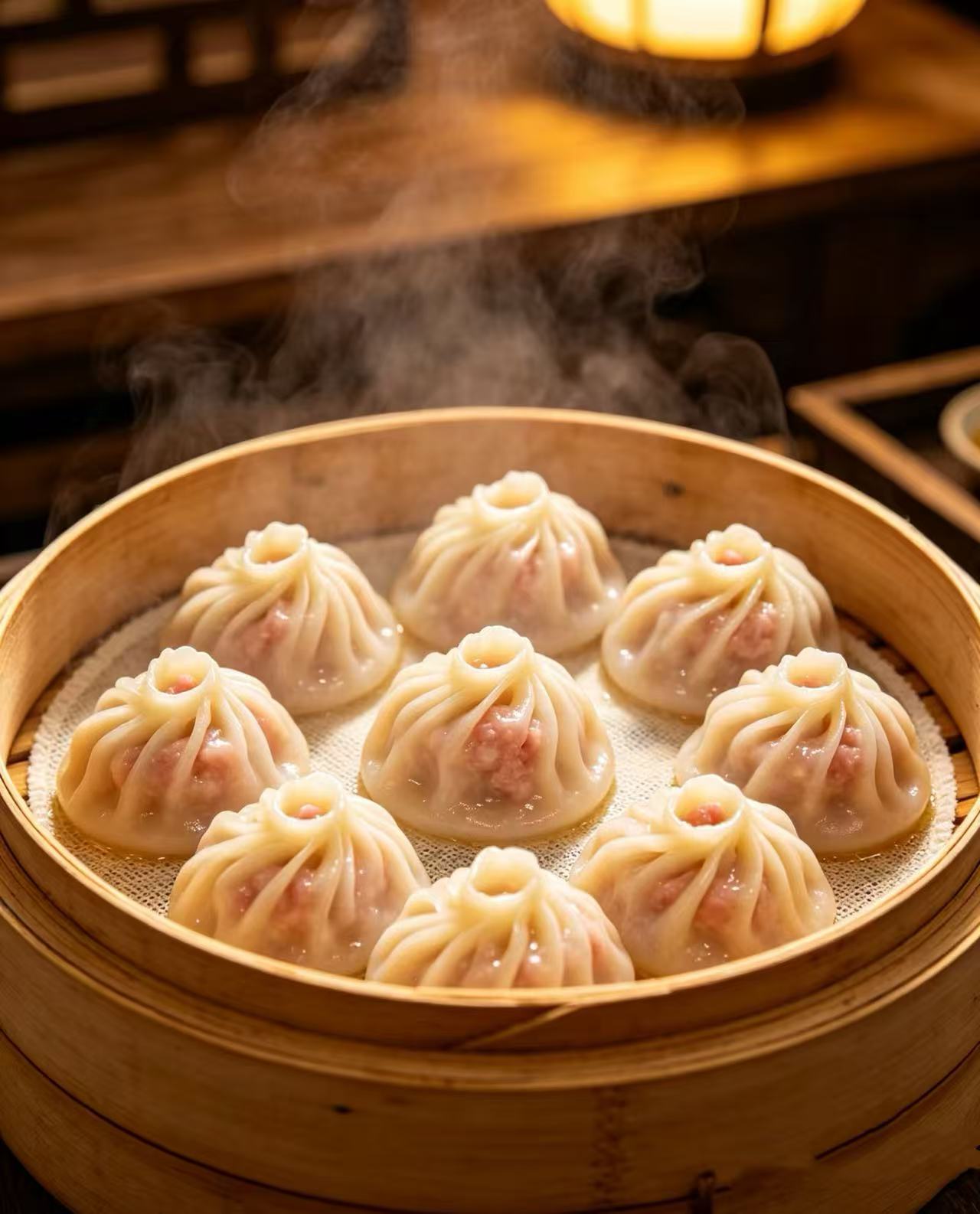
A bamboo steamer arrives at the table, the lid lifts, and a row of neatly folded dumplings appears. Xiaolongbao (小笼包) are one of Shanghai’s most recognisable food experiences—but the first bite is easier when you know what is inside and how to order. This guide explains the dish, a practical way to eat it and how to fit a tasting into a day exploring the city.
Start with the soup, not a large first bite
A freshly steamed dumpling holds hot broth inside a delicate wrapper. Place it on a spoon, release a little steam and let it cool before tasting. Take your time: the first basket is an experience, not a race.
| Chinese name | 小笼包 · xiǎolóngbāo |
| What it is | A small steamed dumpling with a thin wrapper, filling and soup inside. |
| Classic starting point | Pork xiaolongbao; check the exact filling and ingredients when ordering. |
| Common accompaniment | Chinese black vinegar and shredded ginger, used to taste. |
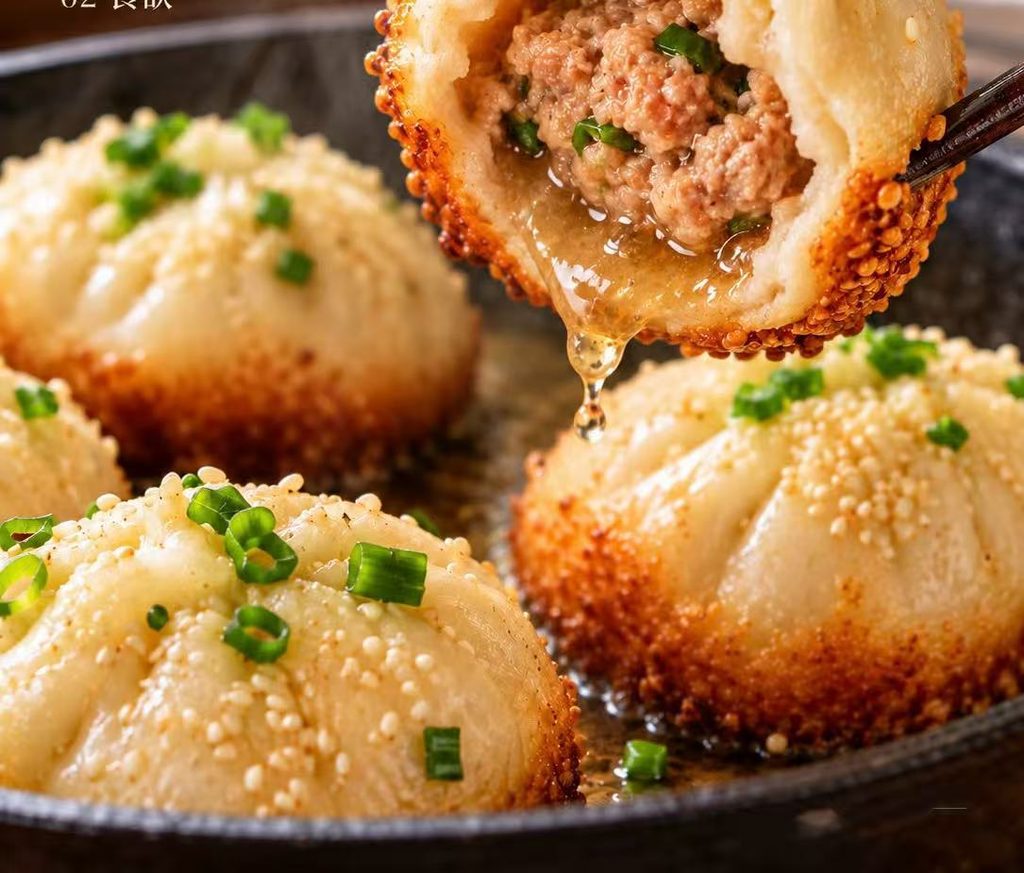
| Useful distinction | Xiaolongbao are steamed; shengjianbao are pan-fried buns with a crisp base. |
In this guide
- What makes xiaolongbao special?
- How to eat soup dumplings
- Ordering your first basket
- Where to try them in Shanghai
- Xiaolongbao versus shengjianbao
- Building a relaxed Shanghai food stop
- Explore Shanghai with a local host
What makes xiaolongbao special?
The pleasure comes from three elements working together: a delicate wrapper, a savoury filling and broth enclosed inside. During steaming, the jellied stock in the filling melts into soup. Shanghai’s official culinary guide describes the Nanxiang style as a thin-skinned dumpling traditionally made with pork and jellied pork skin. Read the official culinary overview.
“Soup dumpling” means that the soup is inside the dumpling, rather than simply a dumpling served in a bowl of soup. MICHELIN’s dumpling overview makes the same distinction. Knowing this helps when you compare xiaolongbao with wonton soup or other dumplings on a menu.
Nanxiang, in Shanghai’s Jiading District, is closely associated with the dish. Shanghai’s official introduction traces the modern Nanxiang version to the nineteenth century. For visitors, the useful point is that this is a local food tradition with different makers and styles—not a dish that needs to be judged by one rigid ranking. The city’s introduction to xiaolongbao.
How to eat soup dumplings
Shanghai’s official food introduction recommends moving the dumpling gently onto a spoon, opening the wrapper and tasting the soup before eating the rest. The following is a practical version of that approach.
- Prepare your spoon. Keep it close to the steamer so that a dumpling does not need to travel far.
- Lift gently. Use chopsticks carefully and support the dumpling on the spoon. Avoid squeezing the wrapper.
- Release the steam. Make a small opening in the wrapper and pause before sipping; fresh broth can be very hot.
- Taste the soup. Sip carefully once it is comfortable to do so. A spoon also catches broth if the wrapper splits.
- Finish the dumpling. Add a little vinegar and ginger if you enjoy them, rather than overwhelming your first taste.
You do not have to perform the process perfectly. If a wrapper breaks, keep the filling and broth on your spoon and continue. Ask for another spoon if sharing makes the table awkward, and let children’s portions cool before helping them taste.
Ordering your first basket
Start with one classic filling that everyone at the table understands, then decide whether to try another basket. Portion sizes vary, so check how many dumplings are included and whether the listed price is per basket or per serving. A small first order leaves room to compare another snack later.
- Classic pork: a straightforward way to understand the balance of wrapper, meat and broth.
- Crab or crab roe: ask exactly what the filling contains; a crab-labelled dumpling may also contain pork.
- Vegetable or other fillings: do not assume the broth and seasoning are vegetarian solely from the name. Confirm with the restaurant.
- Condiments: taste a dumpling before deciding how much vinegar or ginger you want.
If ingredients matter to you, describe the requirement clearly rather than relying on a photo menu. Ask about the filling, broth and shared preparation equipment. A host can help with the conversation, but the restaurant needs to confirm what it can provide.
Where to try xiaolongbao in Shanghai
Choose a location that fits the rest of your day. A famous name can be enjoyable, but a convenient stop with time to sit down may suit your visit better than crossing the city for a queue.
The Yuyuan and old-city area
Shanghai’s official food guide lists Nanxiang Steam Bun Restaurant (南翔馒头店) in the Yuyuan area as a longstanding example. This can be a useful food stop alongside old-city sightseeing. Confirm the current branch, menu and seating arrangements before going; the area is larger than the garden entrance alone.
Central Shanghai and neighbourhood options
The same official guide includes Jia Jia Tang Bao (佳佳汤包), associated with Huanghe Road, and Wan Shou Zhai (万寿斋) in Hongkou. These are examples to consider when planning a route, not a promise of current opening hours, a particular queue length or a fixed menu. Official Shanghai guide and restaurant examples.
Nanxiang as a separate excursion
If the history of the dish interests you, consider Nanxiang as a separate part of your itinerary rather than assuming it is next to Yuyuan. Shanghai’s official Nanxiang destination page is a useful starting point. Allow time for the journey and decide whether the outing is mainly about food, gardens or the old streets.
Xiaolongbao versus shengjianbao
Both are worth understanding when reading a Shanghai snack menu. Xiaolongbao give you a soft, steamed wrapper and enclosed broth. Shengjianbao are pan-fried buns, recognisable by their crisp base. They are a different eating experience, so choosing one does not mean you have tried the other.
For a simple comparison, try a small serving of each at separate stops and leave time between them. Focus on what you enjoy—soft wrapper, broth, crispness or filling—rather than trying to order every variation at once.
Build a relaxed Shanghai food stop
- Pick one area that already fits your sightseeing route.
- Choose a first basket and a drink before adding more dishes.
- Leave a little time for a queue, ordering and letting the food cool.
- Combine the stop with a short walk rather than several back-to-back meals.
- Keep a backup nearby if the chosen shop is closed or too busy.
A dumpling tasting works well as one part of a city day. You can spend the rest of the time exploring architecture, markets or neighbourhood lanes, instead of making the whole itinerary depend on a single restaurant.
Common questions
Are xiaolongbao always made with pork?
Pork is the classic starting point, but menus may offer other fillings. Ask about the broth as well as the main ingredient, particularly if you avoid meat or seafood.
Are they a snack or a full meal?
Either, depending on the size of your order and what you add. Start modestly if you want to sample other Shanghai foods later.
Do I need to book a dedicated food tour?
You can enjoy a basket independently. Local support is helpful when you want help reading a menu, explaining preferences and fitting a food stop into a broader city itinerary.
Explore Shanghai with a local host
If you would like help combining local food with city exploration, view our Shanghai One-Day Private Tour or browse Shanghai private tours. Tell us that xiaolongbao is a priority so the possible food stop, restaurant and any extra cost can be discussed before booking.
A food preference is not an automatic inclusion
The Shanghai tour product lists a local snack or light meal, but that does not guarantee a particular restaurant or a xiaolongbao tasting. Confirm the dish, dietary requirements and any additional charge with your host before booking.
Sources and update note
Food and destination information checked on 12 October 2026. Restaurant examples come from the official city guide; check current branch details and menus when planning your visit.