You have one day in Shanghai. Would you rather follow a ready-made itinerary, or spend the day exploring the places that interest you most?
Both group tours and private guides can help you discover a city. The better choice depends on your budget, your interests, and how you want to spend your time.
When a Group Tour Makes Sense
A group tour can be a convenient choice if you enjoy travelling with others and prefer to have the day planned for you. Shared tours can also offer a lower cost per person.
You know where you are going, transport is usually arranged, and you can meet fellow travellers along the way.
The trade-off is flexibility. The itinerary needs to work for the whole group, so you may spend time at places you would not have chosen yourself—or leave somewhere just as you start enjoying it.
That does not make it a bad tour. It simply means the day is designed around a shared schedule.
When a Good Itinerary Is Not Your Itinerary
Imagine spending an hour at a museum when you would rather explore a local neighbourhood. Or stopping briefly at a market where you would happily spend the whole afternoon.
On a group tour, changing the plan is usually difficult. There are other guests, scheduled activities, and a departure time to consider.
You may also spend part of the day waiting for everyone to return to the meeting point or travelling between pickup locations, depending on how the tour operates.
If you have several days to explore, these compromises may feel small. If you have only one day—or a few hours between other commitments—they can matter much more.
What a Private Local Guide Can Add
A private tour starts with a different question:
**What would make this a good day for you?**
Perhaps you want to see the Bund, but have little interest in museums. Perhaps you love food markets, photography, architecture, or quiet streets. You might be travelling with children or parents who need a gentler pace.
A local guide can use those preferences to suggest a practical route, taking account of distances, opening hours, transport, and time for breaks.
The aim is not to squeeze in as many attractions as possible. It is to create a day that feels worthwhile.
Sometimes that means visiting fewer places and enjoying them more.
Flexibility Makes a Difference
Plans can change once you are out exploring.
You discover a neighbourhood you love. It starts raining. Someone needs a rest. You decide that a relaxed lunch sounds better than another attraction.
With a private guide, there is more room to adjust the day together. Tickets, reservations, and transport arrangements may still set some limits, but the pace can respond to you.
You also have someone to ask the small questions that arise along the way: What is this food? How do people live here? Where could we go next?
Those conversations can make a place feel more personal and easier to understand.
How to Choose
A **group tour** may suit you if you:
– Prefer a fixed itinerary and a shared experience.
– Are happy to follow the group’s pace.
– Want to keep the cost per person lower.
A **private guide** may suit you if you:
– Have limited time and specific interests.
– Want more control over where you go and how long you stay.
– Are travelling with people who have different needs.
– Prefer personal attention and room to change the plan.
Before booking either option, check what is included. Guiding, transport, meals, and entrance tickets may be priced separately.
Make the Day Your Own
You do not need to visit every famous attraction to have a memorable trip.
A morning exploring old streets, a good local lunch, and time by the river might mean more to you than a long checklist of landmarks.
At SHOST, we start by listening to what you enjoy, what you would rather skip, and how much time you have. Then we help shape a Shanghai experience around you.
**Tell us what your ideal day looks like—even if you only have a few ideas to begin with.**
Yu Garden (Yuyuan) offers a different Shanghai from the high-rise skyline: a classical garden of rockeries, water, pavilions and carefully framed views. Before visiting, distinguish the ticketed garden from the surrounding Yuyuan Bazaar and the City God Temple area. They sit near one another, but they are not the same attraction or one shared admission ticket.
Garden, bazaar or temple: which do you mean?
Yu Garden : the classical garden with its own visitor entrance and admission arrangements.
Yuyuan Bazaar : the surrounding commercial streets and buildings, with shops and places to eat. Event rules and shop hours vary.
City God Temple : a separate religious site in the same broader neighborhood, with its own access conditions.
A picture of an illuminated shopping street does not establish that the classical garden is open that evening. When booking or navigating, check that the description says which place you will actually enter.
Is Yu Garden worth visiting?
Yu Garden offers a very different side of Shanghai from the modern skyline. It is a good place to experience traditional Chinese garden design, classical architecture, rockeries, ponds, and the atmosphere of old Shanghai.
How much time do you need at Yu Garden?
For most visitors, 1–1.5 hours is enough to explore Yu Garden at a relaxed pace.
If you also want to walk around the City God Temple and Yuyuan Bazaar, allow around 2–3 hours for the whole area.
For a first-time visit to Shanghai, Yu Garden is easy to combine with the Bund, Xintiandi, or nearby Old Town neighborhoods as part of a half-day or full-day itinerary.
What is the best time to visit Yu Garden?
For atmosphere and photography, evening is one of the best times to visit the Yu Garden area. The traditional rooftops, lanterns, and surrounding streets look especially beautiful after the lights come on.
If you prefer a quieter experience, morning is the second-best choice, when the area is usually calmer and more relaxed.
So, for first-time visitors, I would recommend evening for the atmosphere, morning for the peace and quiet.
What should you eat near Yu Garden?
The Yu Garden area is a good place to try some classic Shanghai snacks and local dishes.
Popular choices include xiaolongbao (soup dumplings), shengjian (pan-fried buns), wontons, noodles, and traditional Shanghai-style snacks.
For first-time visitors, I would suggest trying one or two local specialties rather than eating too much in one place, so you can continue exploring the Old Town and nearby streets comfortably.
What can you combine with Yu Garden?
Yu Garden is easy to combine with several nearby Shanghai highlights.
For a first-time visit, a good combination is Yu Garden + the Bund + Xintiandi, giving you a mix of traditional Shanghai, historic neighborhoods, and the city’s famous skyline.
If you prefer a more local experience, you can also combine Yu Garden with Old Town streets, Fuxing Park, or Suzhou Creek as part of a longer city walk.
The Bund (外滩, Waitan) is a place to understand Shanghai by looking in two directions: toward its historic waterfront buildings and across the Huangpu River to Pudong’s modern towers. You do not need a complicated itinerary to enjoy it. This guide helps you plan a manageable walk, choose a photography time and combine the waterfront with nearby sightseeing.
What and where is the Bund?
Shanghai’s municipal visitor guide describes the Bund as a roughly 1.5-kilometer waterfront and protected historic district in central Shanghai. It sits on the west side of the Huangpu River, with the historic building frontage behind the promenade and Lujiazui across the water. This classic Bund is distinct from the North Bund and the West Bund; check the map location when arranging a meeting or booking a hotel.
Quick planning essentials
Chinese map search: 外滩. Confirm the exact meeting point, not just the district name.
Time allowance: as a planning suggestion, reserve 45–90 minutes for a relaxed walk and photographs, with more time for a meal or an architectural detour.
Admission: an ordinary walk along the public promenade does not require an observation-deck ticket. Cruises, attractions and access inside buildings are separate. Temporary crowd controls can change access.
Clothing: bring comfortable walking shoes and a layer suited to the weather; exposed waterfront conditions may feel different from sheltered streets.
A simple first-visit walk
Start where your transport route or host makes arrival easiest. A central stretch of the waterfront is enough to appreciate the contrast between the two banks. Pause to look across at the distinctive spheres of the Oriental Pearl Tower, then turn back toward the historic frontage. Use designated crossings when moving between the riverside and the buildings.
Rather than trying to photograph every landmark from one spot, walk a short distance and compare the changing angles. If you still have time and energy, continue toward the northern end and the Suzhou Creek area. Keep your route flexible around weather, crowds and any temporary access instructions.
Daytime or evening?
Daytime: useful for observing the building details and the river’s geography. Visibility matters more than a particular clock time.
Late afternoon: can combine daylight with an evening atmosphere, but allow for the season’s sunset time and leave space for a break.
Evening: offers opportunities to photograph illuminated buildings and reflections. Lighting schedules vary; do not plan around an unverified promise that every building will be lit at a fixed time.
Photography without rushing
Take a wide image to show the river and skyline, then a closer architectural detail for contrast. Keep the horizon level and use the railing as a boundary, not a place to climb. Wait for space instead of stepping into another visitor’s photograph. If you are using a tripod or professional equipment, check current local restrictions and keep pedestrian routes clear.
The Oriental Pearl Tower guide explains the difference between seeing the tower from the Bund and visiting its interior viewpoint. A photograph from this bank does not require crossing to Pudong.
Getting there and crossing the river
Use your map app to select the appropriate station, exit and final walking route for the section of the Bund you want to visit. For a taxi or private car, agree on a legal drop-off point and walk the final stretch if required. Busy traffic and crowd controls can make a door-to-promenade arrival unrealistic.
Lujiazui is on the opposite bank. To visit both sides, plan an actual river crossing by current metro, road or ferry services. A ferry is transport, while a sightseeing cruise is a different product; check the boarding pier, destination and operating times before paying.
Combine the Bund with Shanghai’s old city
One possible day pairs Yu Garden and the surrounding old-city streets with a later Bund walk. Visit the ticketed garden during its confirmed opening hours, leave time for lunch, and approach the waterfront without a tight connection. This is an editorial route suggestion, not a fixed tour schedule.
Frequently asked questions
Do I need a cruise to enjoy the skyline?
No. The public waterfront offers a different perspective from a boat. Choose a cruise only if the route, timing and boarding arrangements fit your plans.
Can I enter the historic buildings?
Do not assume every building is open to visitors. Hotels, businesses and other occupants have their own entry policies. Enjoy the architecture from public areas and ask before entering.
Is it suitable for families or visitors with limited mobility?
Choose a shorter section, plan breaks and check an accessible approach to the promenade in advance. Busy periods may make movement and meeting up more difficult; agree on a clear landmark and contact method.
Explore with a local host
The related Shanghai One-Day Private Tour can be a starting point for planning a day around the Bund, local neighborhoods and other interests. Ask your host to agree the meeting point, walking pace and any optional river crossing. Cruise tickets, meals and private building access are not automatically included simply because they appear in this guide.
Sources and photo credit
Information checked on 15 October 2026. Reference: Shanghai Municipal Government: The Bund. Walking times, route ideas and photography advice are SHOST editorial suggestions. Follow current local access instructions.
Photo: Pudong night skyline viewed from the Bund in Shanghai (2018), David Zhang, Wikimedia Commons, CC BY-SA 2.0. Reused from SHOST’s media library at reduced resolution; responsive display may crop it. This archival photo shows the view from the Bund, not current lighting conditions.
The Oriental Pearl Tower (东方明珠) is one of Shanghai’s most recognizable landmarks, with its distinctive spheres rising above Lujiazui beside the Huangpu River. A visit can mean a skyline viewpoint, a closer look at the tower’s architecture, or a stop in a broader Pudong walk. This guide helps you choose between those experiences and plan your day without assuming every ticket includes the same attractions.
Quick planning essentials
Location: No. 1 Century Avenue, Lujiazui, Pudong New Area, Shanghai. Search for 东方明珠广播电视塔 in your map app.
Published opening hours: Shanghai’s official tourism listing gives 8:00–22:00, with last entry at 21:00. Confirm the date-specific schedule before booking; these are reference hours, not a guarantee for every attraction inside.
Visit length: as an editorial planning allowance, set aside roughly 2–3 hours for an interior visit, with extra time for queues or a meal. A short exterior photo stop needs much less time.
Tickets: compare the included attractions, admission date and entry conditions. Do not assume a dining or cruise package is included with a standard sightseeing ticket.
What makes the tower worth considering?
The tower is 468 meters tall, but its appeal is not simply a height comparison. Its unusual shape is a familiar symbol of Shanghai, and the river-side setting helps connect the historic Bund with the modern Pudong skyline. Shanghai’s municipal visitor profile describes panoramic city views and a lower-sphere outdoor sightseeing corridor overlooking the Bund.
If your priority is recognizing Shanghai’s classic skyline, seeing the tower from outside may be enough. If you enjoy looking down over the city and tracing the river and waterfront, consider an interior sightseeing visit. These are different experiences: the view of the tower and the view from the tower.
Choosing tickets: check the inclusions first
Before paying, open the attraction list for the exact ticket you intend to buy. Package names can be similar even when access differs. Use this checklist rather than relying on a single headline price:
Which observation areas are included? Are any areas temporarily closed?
Is a glass-floor experience, historical display, restaurant booking or other attraction explicitly listed?
Is river cruising included or sold separately? Where would that activity depart?
Is entry tied to a date, time window or named visitor? What documents must you bring?
What are the current child admission rules, refund conditions and final admission time?
Use the tower’s official channels or a clearly identified authorized seller. Check that the ticket is for Oriental Pearl Tower, rather than Shanghai Tower or another nearby observation deck. This guide does not publish a fixed ticket price because packages and promotions need checking for your visit date.
Daytime, sunset or evening?
Daytime: a useful choice when you want to identify buildings and follow the river’s shape. Check visibility rather than assuming a bright forecast means a clear skyline.
Late afternoon: consider arriving with enough time before sunset to pass entry checks and queues. Sunset timing changes through the year, and an entry time does not guarantee you will reach the viewing area at a particular moment.
Evening: suits visitors interested in city lights. Reflections on viewing windows can make photos harder; try a different angle and avoid flash.
These are planning suggestions, not a promise of weather, lighting schedules or crowd levels. If the skyline is obscured, an exterior walk or another indoor activity may be a better use of your time than a viewpoint ticket.
Getting there and finding the entrance
For public transport, route to Lujiazui (陆家嘴) and follow the current station signs and map directions to the tower’s visitor entrance. Check the appropriate exit for your starting point and mobility needs rather than relying on an old exit number. For a taxi or private car, show the Chinese name and confirm the legal drop-off point with your driver.
Lujiazui has busy roads, elevated pedestrian routes and several large attractions close together. Leave time for the final walk and check the entrance shown on your ticket. The tall tower is easy to spot; spotting it does not necessarily mean you are already at the admissions entrance.
A relaxed Lujiazui and Bund itinerary
A possible sequence is an Oriental Pearl visit, a meal or break in Lujiazui, then a Pudong riverside walk. Continue to the Bund later if you want to compare the two sides of the river. This is a suggested route, not a timed package: adjust it around your chosen ticket, weather and energy level.
The Bund and Lujiazui are on opposite sides of the Huangpu River. Plan an actual crossing using current metro, road or ferry services; they are not connected by a simple riverside walk. Check the operating hours of your chosen crossing, especially after an evening visit.
For a short stay, choose one paid viewpoint and allow more time at street level. Trying to fit several observation decks into the same afternoon can leave little time to enjoy the waterfront.
Practical tips for families and first-time visitors
Check child admission conditions against the chosen ticket before purchasing.
If you need step-free access, stroller storage or other assistance, ask the venue about the exact areas you plan to visit.
A glass-floor experience is optional as a personal choice; confirm the available route if anyone in your group is uncomfortable with heights.
Keep some flexibility after the visit rather than booking another fixed-time activity immediately afterwards.
For photographs, respect barriers and visitor rules, keep bags close and allow other guests space at the windows.
Frequently asked questions
Is Oriental Pearl the same as Shanghai Tower?
No. They are separate landmarks in Pudong. Check the attraction name carefully when booking and navigating; a ticket for one does not admit you to the other.
Can I see it without buying an observation ticket?
You can photograph the tower from public areas outside, subject to any local access restrictions. Paid interior sightseeing is a separate experience. From the Bund, the tower forms part of the Pudong skyline rather than a close-up architectural view.
Is a restaurant visit included?
Only if your selected product explicitly includes it. Confirm dining time, meal details and any observation access attached to that booking instead of treating dining as part of every entry ticket.
Will my sightseeing tour include tower admission?
Do not assume so. Confirm your preferred stop, ticket availability, entry charges and time allowance with your host before booking.
Plan your Shanghai day with a local host
The related Shanghai One-Day Private Tour is a starting point for discussing a day around your interests, including Lujiazui, the Bund and local neighborhoods. Ask whether an Oriental Pearl visit fits your route and whether you want exterior photos or an interior visit. Tower tickets, meals and cruises require explicit confirmation; this article does not add them to the product’s inclusions.
Photo: Pudong night skyline viewed from the Bund in Shanghai (2018), by David Zhang, via Wikimedia Commons, CC BY-SA 2.0. Reused from the SHOST media library at a reduced resolution; responsive display may crop the photograph. This archival skyline image includes the Oriental Pearl Tower and does not document current lighting or access conditions.
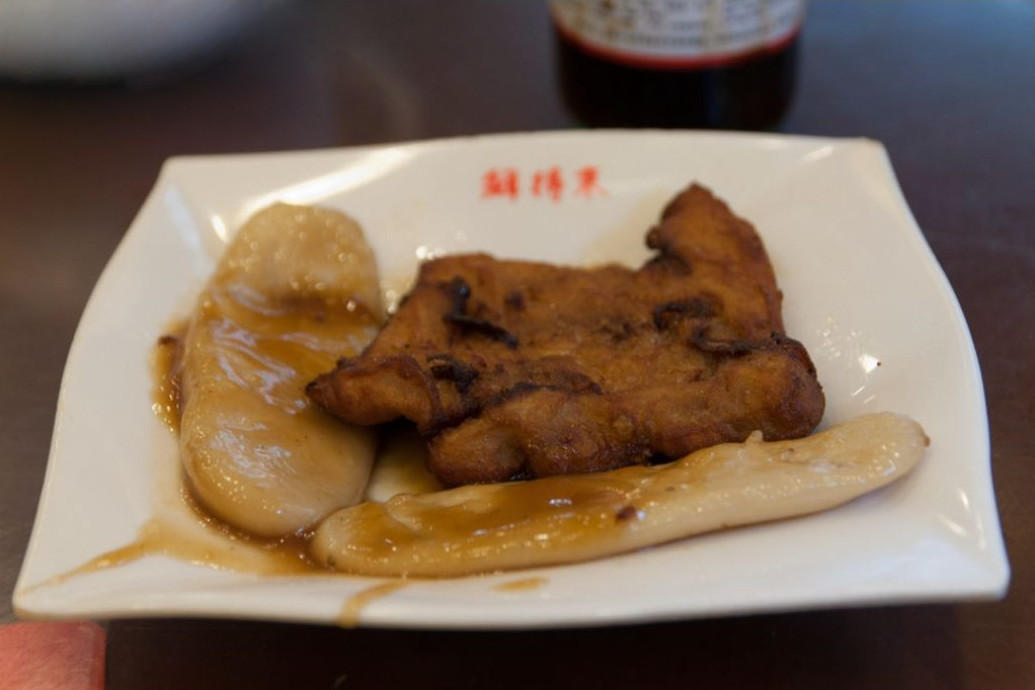
Paigu niangao (排骨年糕) brings together a fried pork chop, chewy rice cakes and a savory-sweet sauce. It is a satisfying introduction to Shanghai’s everyday food culture—and a useful lunch stop between neighborhood walks. This guide explains what to order, how to recognize the dish and how to fit a tasting into your Shanghai visit.
What is paigu niangao?
The Chinese name combines paigu (pork ribs or a pork chop in this dish) with niangao (rice cakes). Expect a substantial piece of fried pork alongside rice cakes with a soft, chewy texture. These are savory rice cakes served as part of a meal, rather than a sweet dessert.
The contrast is the attraction: richly seasoned meat, rice cakes that hold the sauce, and a combination of sweet and savory flavors. Preparation differs between shops. Shanghai’s official food guide distinguishes the thin-batter pork used in paigu niangao from the breadcrumb-coated chop associated with Shanghai-style Western cooking. Do not expect every version to look or crunch like a breaded cutlet.
Where to start: Xian De Lai (鲜得来)
Xian De Lai is a long-established name associated with this dish. Shanghai’s official visitor website dates its beginnings to 1921 and notes that its preparation technique is recognized as intangible cultural heritage in Huangpu district. Its connection with the Yunnan Road food area makes it a natural starting point when planning a central-Shanghai food stop.
Before you go: search for 鲜得来排骨年糕 in your map app and confirm the exact branch, current address and opening hours. The municipal profile was published in 2024, so its listed street number should not be treated as a live location check. Check the current menu for prices; this guide does not quote an unverified meal cost.
How to order: useful Chinese phrases
一份排骨年糕,谢谢。 — One portion of pork chop with rice cakes, please.
酱汁可以少一点吗? — Could you use a little less sauce?
辣酱油可以放旁边吗? — Could you serve the Worcestershire-style sauce on the side?
我们想分着吃。 — We would like to share.
Show the first sentence on your phone if pronunciation feels difficult. Ask what comes with the portion before adding extra dishes, and confirm whether you order and pay at the counter or at the table.
How to enjoy your first portion
Try the pork and rice cakes separately first. Then take a bite of each together to appreciate the contrast.
Taste before adding condiments. Shanghai’s la jiangyou (辣酱油) is a local Worcestershire-style condiment, rather than ordinary soy sauce. Its tangy flavor can change the balance of the dish.
Take care around the bone. A pork chop may still contain a bone, even when cut into smaller pieces.
Keep the rest of your food walk flexible. Start with one portion if you plan to share and taste several Shanghai snacks. Add another dish after judging the portion size.
Fit it into a Shanghai sightseeing day
Treat the meal as a stop within your day, rather than building your whole itinerary around a queue. One possible plan is a morning walk in central Shanghai, a paigu niangao lunch, and an afternoon exploring another neighborhood. Choose the sequence after confirming your restaurant branch and the places you want to visit.
If you want a broader introduction to local food, compare this dish with xiaolongbao, shengjianbao and scallion oil noodles. They offer different textures and suit different appetites; you do not need to eat all four in one sitting.
Frequently asked questions
Is it the same as fried pork chop with rice?
No. Order 排骨年糕 for pork with rice cakes. A dish served over ordinary steamed rice is a different order.
Is it spicy?
The usual appeal is savory-sweet rather than chili heat, but sauces and recipes vary. Ask about the seasoning and request condiments separately if you prefer a mild meal.
Is it vegetarian or gluten-free?
The standard dish contains pork. Rice cakes alone do not establish that the whole dish is gluten-free: batter, sauces and kitchen practices need checking with the restaurant. Tell staff your specific dietary requirements before ordering.
Explore Shanghai with a local host
The related Shanghai One-Day Private Tour can be a starting point for discussing a sightseeing day with local food interests. Ask your host whether a paigu niangao stop fits your preferred route. A visit to a particular restaurant or a serving of this dish is not automatically included; confirm arrangements and food costs before booking.
Sources and photo credit
Editorial information checked on 14 October 2026. References: Shanghai Municipal Government’s Pork Chops and Rice Cakes profile and its Deep-fried pork chop guide. Ordering phrases and itinerary suggestions are SHOST editorial guidance, rather than a claim of a restaurant visit.
Photo: Paiguniangao by coolmanjackey, via Wikimedia Commons, CC BY-SA 3.0; using the Commons version edited by Edithsme. Converted from JPEG to PNG without changing the picture; responsive display may crop it. The photograph depicts the dish and is not a current restaurant or portion-size guarantee.
Illustration of a private airport transfer service at Shanghai Pudong International Airport (PVG).
Your Shanghai journey often begins before you see the Bund: how will you get from the airport to your hotel? After an overnight flight, even a straightforward journey can feel complicated when your phone has little battery, your hotel address is in English, and everyone is tired.
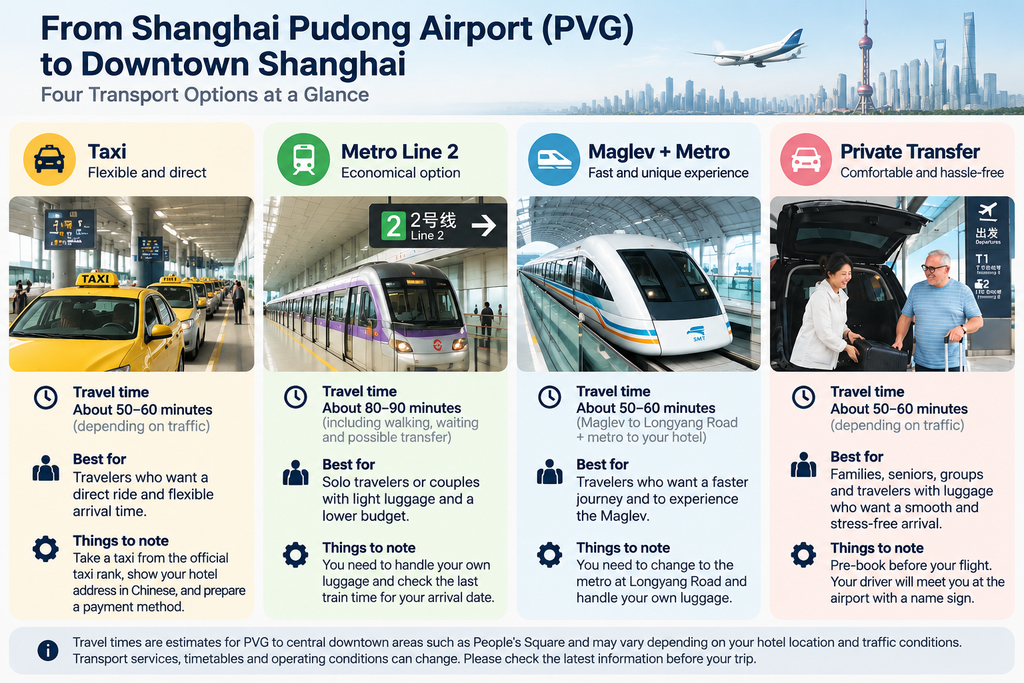
As a Shanghai local host who welcomes international travelers, I suggest choosing your arrival transport based on your luggage, landing time, and hotel location. The cheapest ticket is useful only if the rest of the journey works for you. This Shanghai airport transfer guide compares taxi, Metro Line 2, Maglev plus metro, and a private pickup from Pudong International Airport (PVG).
The short answer: travel light and arrive during train operating hours, and the metro is a sensible choice. Carry several bags, travel with older relatives, or arrive late, and a road transfer deserves consideration. Below, I explain what each option feels like in practice.
PVG or SHA: which Shanghai airport are you arriving at?
Shanghai Pudong International Airport (PVG)
Pudong is Shanghai’s main gateway for many long-haul international arrivals, although it also handles domestic flights. It sits east of the central city. Your ticket should show PVG, and your arrival terminal matters when arranging a pickup.
“Downtown Shanghai” is not one drop-off point. A hotel near People’s Square, one in Lujiazui and one in the former French Concession can require different routes. Use your hotel’s full address when comparing travel options, rather than assuming every downtown transfer takes the same time.
Shanghai Hongqiao Airport (SHA)
Hongqiao is west of the center and primarily serves domestic flights and regional East Asian routes. If you connect through another Chinese city, you may land here instead. Terminal 1 is served by Metro Line 10; Terminal 2 has Lines 2 and 10.
Hongqiao Airport and Hongqiao Railway Station are different arrival locations. Check your airport code, terminal and flight number before booking. Shanghai’s Airport Link Line connects the two airports in about 40 minutes, but an airport-to-airport connection is a separate journey from getting to a downtown hotel. See the city’s official airport transport guide for these connections.
PVG to downtown Shanghai: four transport options compared
Compare the complete journey: walking out of arrivals, waiting, changing trains, and reaching the hotel entrance. Transport runs and fares can change, so use the figures below as planning references and check current information before departure.
1. Taxi: flexible, direct and paid by the meter
Follow the airport signs to the official taxi queue. A taxi gives you a direct ride without advance booking, which is helpful if you prefer deciding after you land. Show the driver your hotel’s Chinese name and address, and ask for a receipt at the end.
Shanghai’s official airport guide gives a reference of around RMB 180 and about 50 minutes from PVG to People’s Square. That is an example, not a fixed fare. Your actual destination, congestion, waiting charges and applicable surcharges can change the total. Allow extra time for the airport queue as well.
For a first-time visitor, the main advantage is avoiding train changes. The main difficulty is communicating the exact destination and payment method. For families, an ordinary taxi’s luggage space may be insufficient even when the passengers fit. Seniors may appreciate fewer walking stages, but still need to reach the rank and board the vehicle.
For a late-night arrival, a taxi is a practical fallback after rail services finish. Use the designated rank rather than accepting unsolicited offers in the terminal. Prepare the address and a payment backup before joining the queue.
2. Metro Line 2: economical if you can manage your bags
Metro Line 2 connects Pudong Airport with central stops including East Nanjing Road and People’s Square. The official city guide lists about RMB 7 and approximately one hour to People’s Square. Add walking, ticketing and the final journey to your hotel; that hour is not a door-to-door estimate.
For a solo traveler or couple with manageable luggage, the metro offers low cost and avoids road congestion. English station names help with navigation. Check the station closest to your hotel and its most useful exit before landing: arriving at the right station does not necessarily mean the hotel is just outside it.
The trade-off is handling your own bags through station entrances, security checks, platforms and busy carriages. A family with a stroller and several suitcases may find those stages tiring. Older travelers who are comfortable walking can use the metro, but anyone with limited mobility should check lift access and the last stretch carefully.
The metro does not operate around the clock. Check the airport station’s departure times and any onward connection for your travel date. A flight landing before the last train is not enough: immigration, baggage collection and customs come first.
3. Maglev plus metro: a short train ride, with a connection
The Maglev connects PVG with Longyang Road in about eight minutes. It does not take you directly to the Bund or People’s Square. From Longyang Road, continue by metro, such as Line 2, or arrange another road journey.
Choose it if the train experience appeals to you and you can comfortably change services with your luggage. It can shorten the airport rail segment, but the total saving depends on waiting and onward travel. Do not compare its eight-minute ride with a taxi’s entire hotel journey.
Families with bulky luggage and seniors who want fewer transfers may prefer a direct road ride. Late-night travelers must check both Maglev and connecting metro hours. The official metro guide lists a single-trip Maglev and one-day metro pass at RMB 55; compare available tickets for your itinerary rather than assuming one pass suits everyone.
4. Private airport transfer: arrange the arrival before flying
A private transfer replaces the taxi queue and train changes with a prearranged pickup. You share your flight and hotel details before traveling, receive meeting instructions, and travel in a vehicle reserved for your party. For first-time visitors, the benefit is having fewer decisions to make in arrivals.
This can suit families with bags, seniors who prefer less walking, and travelers arriving outside rail operating hours. For travelers who prefer a smoother arrival experience, SHOST provides a private Shanghai airport transfer with an English-speaking driver, flight monitoring, and door-to-door service. Your driver will meet you according to your arrival details and help make your first moments in Shanghai simple and stress-free. The trade-off is paying for a reserved service and agreeing the details in advance. It still uses Shanghai’s roads, so traffic affects it just as it affects a taxi.
Compare the quoted vehicle capacity, luggage allowance, waiting arrangements and any extras. Confirm a late-night pickup, child seat or mobility requirement before booking. A private vehicle is useful only when it matches the people and bags traveling in it.
Prefer to settle your arrival plans before departure?
You can review route and passenger options on the SHOST Shanghai Airport Transfer booking page. Have your hotel address and luggage count ready so the pickup can be planned around your actual journey.
Local arrival tips that make the journey easier
After helping international travelers arrive in Shanghai, I have found that a smooth arrival often depends on a few small details. Preparing payment methods, keeping your hotel address ready, and knowing your pickup arrangements can make your first moments in the city much easier.
Prepare your payment method
Shanghai is becoming increasingly convenient for international visitors, but it is still a good idea to prepare your preferred payment method before arrival. Keep a backup option available, especially when you have just landed and need to arrange your first ride.
Save the hotel address in Chinese
Ask your hotel for its Chinese name, street address and reception number. Save a screenshot you can open offline. An English hotel name alone can be ambiguous, particularly when a brand has several Shanghai properties.
Keep your phone usable after landing. Sort out mobile data or roaming beforehand, charge your battery and save the pickup instructions offline. For a booked transfer, tell the provider promptly if your flight number or destination changes.
Count luggage separately from passengers
Three passengers with small cabin bags need different space from three passengers with large suitcases. Include strollers, folding wheelchairs and oversized items in your luggage description. Request child seats in advance; do not assume they come with a standard taxi or transfer.
Keep medicines, documents and a change of clothes in a small bag you can reach easily. If using rail, plan for the moment when one person must handle bags while another looks after a child. An inexpensive route can become uncomfortable when your party cannot move together.
Leave room for traffic and arrival procedures
I would avoid scheduling a tightly timed lunch or sightseeing booking immediately after landing. Immigration queues, baggage delivery and customs are separate from the transfer. Then rush-hour traffic, rain or busy travel dates can lengthen a road journey. Treat an estimated arrival time as a window, not an appointment.
The metro offers more predictable travel once you are aboard, but still involves walking and possible connections. With any option, let your hotel know if you expect to arrive late and confirm its check-in arrangements.
When SHOST private airport pickup is a useful choice
My role as a local host is to help you choose an arrival plan you can comfortably manage. If your hotel is easy to reach by Line 2 and you travel light, taking the metro is reasonable. When you want a person to meet you and a direct ride, When you want a person to meet you and a direct ride, SHOST offers a more comfortable and personalized arrival experience.
The service includes an English-speaking driver, flight monitoring for airport pickups, a private vehicle for your party, and door-to-door transport to your Shanghai hotel or address. Your driver will meet you at the airport arrival hall with a name sign and adjust the pickup time for normal flight delays. Keep your phone available so meeting details can be confirmed.
Flight monitoring helps coordinate pickup; it does not remove immigration delays or make unlimited waiting automatic. Confirm the applicable waiting period and extra charges, and advise SHOST if you are delayed inside the terminal. Child seats must be requested in advance, and additional stops need separate agreement.
Traveling with family or older relatives?
Send your passenger count, number of suitcases and any assistance needs before selecting a vehicle. Check the SHOST Airport Transfer booking options and confirm space for a stroller or mobility aid. This simple preparation can help avoid luggage problems and make your arrival smoother.
Your PVG arrival checklist
Before departure, confirm PVG rather than SHA, save your hotel’s Chinese address, check train hours if using rail, and prepare payment and mobile connectivity. If booking a driver, supply your flight number, arrival date, terminal if known, contact details, passenger count and luggage information.
Choose around the whole journey. Metro works well for light luggage during operating hours; Maglev adds a distinctive ride but still needs a connection; taxis offer flexibility; a private pickup lets you organize the arrival ahead of time. There is no single best choice for every visitor.
Ready to arrange your airport pickup?
If a direct, prearranged ride suits your visit, book your Shanghai Airport Transfer with SHOST. Confirm your route and vehicle details before traveling, then enjoy a smoother arrival experience in Shanghai.
Travel details may change over time. If you have specific arrival requirements, SHOST can help you plan the most suitable transfer option for your trip.
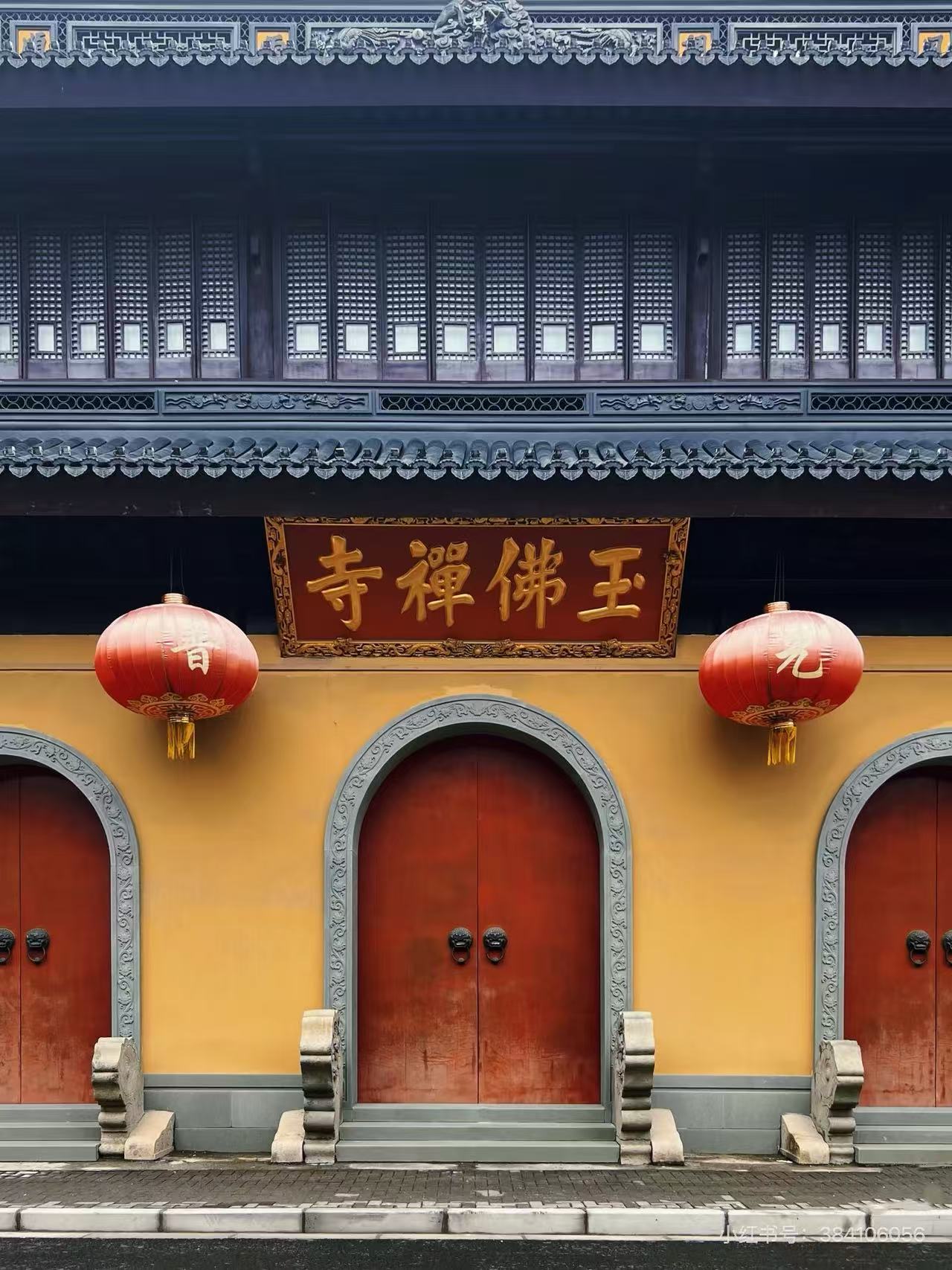
Jade Buddha Temple (玉佛寺 / 玉佛禅寺, Yufo Temple) offers a different kind of Shanghai visit: courtyards, temple architecture and an active place of Buddhist worship. Plan it as a respectful cultural stop rather than a fast photo checklist. This guide covers the official entry arrangements, transport, what to notice and how to combine the visit with a city day.
The temple is a living religious place as well as a cultural attraction. Its official English website introduces the halls and their roles, including spaces associated with Buddhist figures and the reclining Buddha. Approach these as part of an active setting, with other visitors and worshippers sharing the space. Official temple introduction.
You do not need to see every corner to have a worthwhile visit. Choose a few spaces that interest you, observe how people move through them, and leave room to pause. A quieter, more attentive hour can be more rewarding than trying to collect photographs of every building.
Getting to the temple
Use the Chinese name 玉佛禅寺 and the Anyuan Road address in your navigation app. The temple’s standing notice directs metro visitors to Jiangning Road Station on Line 13, Exit 3, followed by a short walk. Follow current station signs if exit arrangements differ, and allow for street crossings and your own walking pace. Official entry and transport notice.
If arriving by taxi or private car, agree on a practical meeting point outside the entrance. Save the return location before entering rather than trying to find the vehicle from inside a busy gate area. A private city outing can simplify the connection between this stop and your next neighbourhood.
Opening and entry arrangements
The standing official notice states that ordinary visits do not require a reservation. It lists earlier openings on the first and fifteenth days of the lunar month and important Buddhist observances. Lunar New Year’s Eve and the first fifteen lunar days follow separately announced arrangements. Check the latest notice for a festival visit. Read the official notice.
Do not build your plan around old admission estimates copied from earlier travel pages. Free ordinary entry is also different from purchasing an offering, a religious service or another optional activity. If a particular hall or activity is the main reason for your visit, confirm its current access with staff.
What to notice during your visit
Courtyards, roofs and the rhythm of the spaces
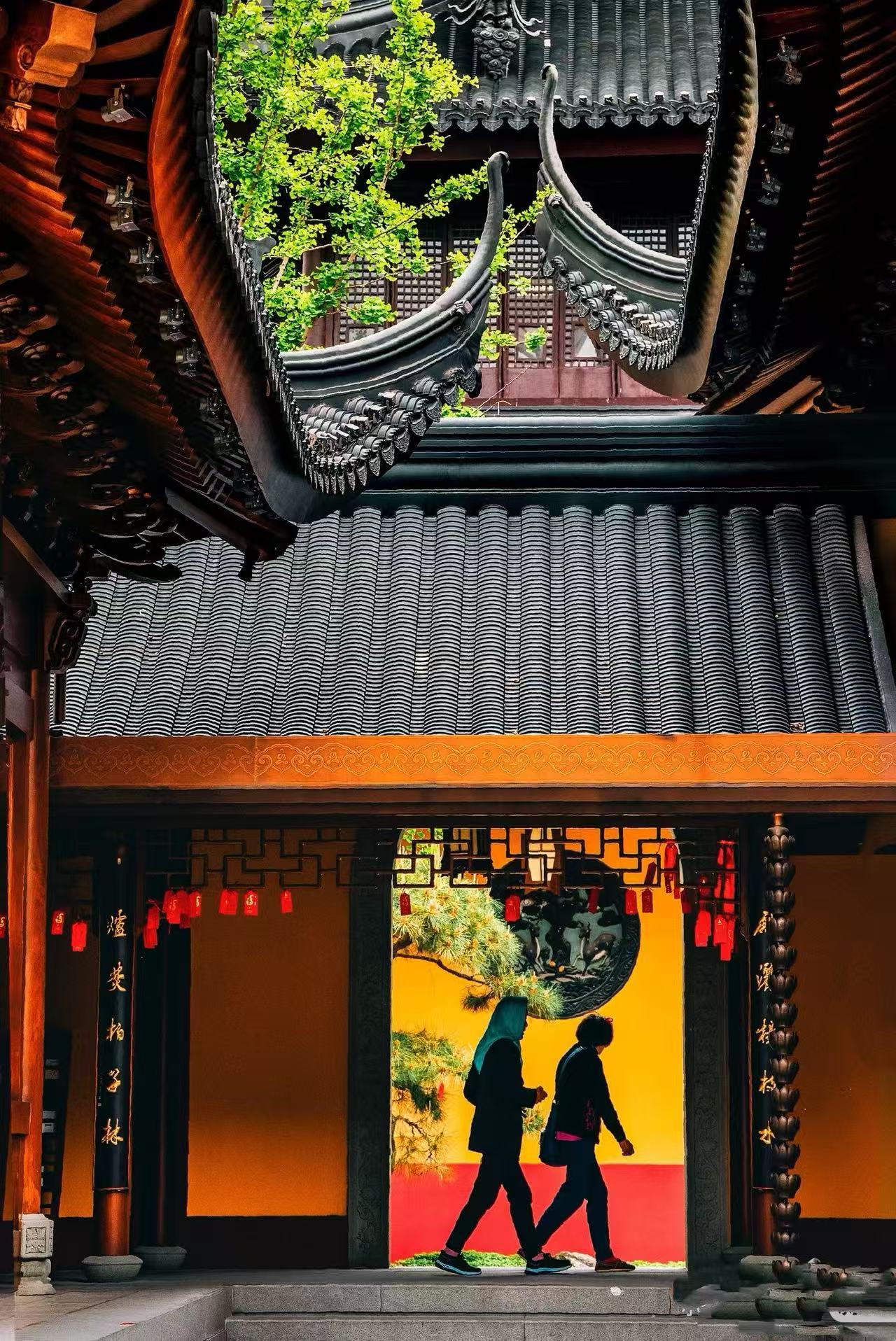
Take time to look at rooflines, doorways and the relationship between open courtyards and enclosed halls. The changing scale helps the visit feel different from Shanghai’s commercial streets. Stay aware of the walking route and avoid stopping in a doorway for a photograph.
The jade Buddha and other halls
The temple’s jade Buddha is its signature cultural focus, while other halls provide a broader setting for the visit. Shanghai’s official tourism page introduces the temple, and the operator’s English site explains individual halls. Check which areas are open and follow the route indicated on the day. Official Shanghai tourism overview; temple hall descriptions.
If a ceremony is taking place, observe from a position that does not interrupt participants. You can enjoy the architecture and learn about the setting without joining any ritual or treating worship as a staged performance.
Notice rooflines and walkways while leaving space for other visitors; image from SHOST’s existing temple collection.
Courtesy, clothing and photography
The temple has published guidance on respectful dress and photography. Use the current signs and staff instructions as your guide rather than assuming a rule applies to every hall. The older guidance linked here is used for etiquette, not for its historical pandemic entry requirements. Official visitor-etiquette guidance.
Choose clothing suitable for a religious place and bring a light covering if needed.
Keep voices low and avoid interrupting people who are praying.
Check photography signs; put the camera away wherever pictures are prohibited.
Avoid flash, and do not photograph people closely without their agreement.
Do not touch statues or throw coins at historic objects.
Ask staff before entering a restricted area or participating in an activity.
For mobility needs, ask about the available route in advance. Historic spaces can include steps and changes of level; a photograph of one entrance is not a reliable accessibility assessment.
A suggested visit and city combination
Start at the entrance. Check notices, access and the route indicated by staff.
Move through the principal spaces. Focus on a few halls and courtyards that interest you.
Pause for details. Look at roofs, doors and carved elements without blocking circulation.
Finish with time to spare. Leave a buffer for your onward walk or pickup point.
This is a planning outline, not an official timed route. For a broader day, combine the temple with one other neighbourhood or a meal, rather than several distant destinations. Travel across Shanghai takes time even when attractions look close on a small map.
Shanghai’s tourism overview notes the temple’s association with vegetarian noodles. If you want a meal there, confirm the current dining arrangements and menu rather than assuming the restaurant follows the same hours as every hall. Official tourism overview.
Common questions
Can I visit if I am not Buddhist?
The official entry notice addresses visitors as well as worshippers. Come respectfully, follow staff instructions and avoid interrupting religious activity.
Can I take photographs everywhere?
No blanket permission should be assumed. Check each area’s signs, avoid flash and respect other people’s privacy.
Should I plan this as a quick stop?
Allow enough time to walk calmly and adapt to the areas open. A short visit can be worthwhile if you focus on a few spaces rather than rushing the entire complex.
Visit with local support
If you would like help arranging the connection, pace and other Shanghai stops, view the Shanghai One-Day Private Tour. Tell Echo that Jade Buddha Temple is a priority. Confirm the planned visit, access arrangements and any additional costs before booking; the product does not automatically guarantee this stop or every temple activity.
For more local planning ideas, browse SHOST travel guides and discuss a route suited to your group.
Sources and update note
Information checked on 13 October 2026. The planning suggestions are editorial advice, not a fixed tour programme. Check current venue notices and menus before a visit.
Shengjianbao (生煎包), also called shengjian mantou (生煎馒头), are a familiar Shanghai snack with a crisp pan-fried base and a softer upper wrapper. Some versions carry plenty of hot broth; others are more bread-like. This guide helps you recognise the differences, order a manageable first serving and enjoy the buns without treating every shop as a competition.
Chinese names
生煎包 / 生煎馒头 / 生煎
Cooking style
Pan-fried buns with a crisp base.
Classic filling
Pork is common; confirm the filling and ingredients on the menu.
First-time tip
Support a bun on a spoon and let hot filling cool before tasting.
Compared with xiaolongbao
A fried base and a different wrapper, rather than a fully steamed dumpling.
Shanghai’s official introduction describes buns cooked in a pan until the bases become golden and crisp, with scallion and sesame used as finishing touches. The upper dough and the filling create a different texture from the base. Official Shanghai introduction to pan-fried buns.
Notice the base, wrapper and filling as separate elements when you taste. The appeal is not only the amount of soup. A bun with a softer, more bread-like wrapper can still be enjoyable, especially if that is the style you prefer.
Why styles differ
The city’s 2026 food guide distinguishes soup-filled hunshui styles from qingshui versions that rely more on the meat’s own juices and a bread-like dough. This explains why two shops can serve noticeably different buns under the same general name. Official guide to shengjian styles.
Ask about the shop’s style if you have a preference. If you already know xiaolongbao, do not expect every shengjian to contain the same kind of broth or wrapper. Try a small serving before deciding whether to order more.
How to eat shengjian comfortably
Use a spoon for support. Move the bun carefully rather than squeezing it between chopsticks.
Open a small part of the wrapper. Let steam escape and give the filling time to cool.
Taste gently. A soup-filled version can release liquid unexpectedly if you take a large first bite.
Enjoy the crisp base. Finish the dough and filling at a comfortable pace; add vinegar if you like it.
The city guide describes eating the broth, filling and fried dough in stages. Treat that as a helpful approach rather than a performance rule. If a bun breaks, use the spoon to catch the filling and continue. Official tasting guidance.
Ordering your first serving
Some traditional shops describe a serving using liang (两). The official city guide explains the familiar four-bun ordering convention, but portions and pricing still need to be checked at the specific shop. Ask how many buns you will receive before paying. Serving conventions in the official guide.
Start with a small serving if you plan to taste other foods.
Confirm whether the filling is pork, seafood or another option.
Sesame and other toppings may be present; ask when ingredients matter to you.
Check the menu price for your actual portion, rather than relying on a photograph online.
Let children’s portions cool and help them handle any hot broth.
Finding a shengjian shop in Shanghai
The official 2026 city guide lists examples such as Da Hu Chun, Dong Tai Xiang and Yang’s Fry-Dumpling. They illustrate different approaches; this article is not a ranking or a guarantee about a current branch. Confirm the shop, menu and opening arrangements for the day you visit. Official restaurant examples.
Choose a stop that fits your neighbourhood plan. Think about whether you want a seated meal, a quick snack or a tasting shared with your group. A backup option nearby makes the visit easier if the first shop has a long queue.
Pairings and a relaxed city route
Shengjian can be the main snack or part of a larger meal. Start with the buns, then decide whether you want a drink, soup or another dish. Avoid filling the whole day with consecutive tastings if you also want time to explore.
Xiaolongbao are steamed soup dumplings. Their softer wrapper makes a useful contrast with the fried base of shengjian; image from SHOST’s media library.
For a comparison, see our xiaolongbao guide. Keep portions modest and allow a walk between food stops, rather than trying to compare several full meals at once.
Common questions
Are all shengjian filled with lots of soup?
No. Styles differ, so ask what the shop makes and choose according to your own preference.
Does mantou mean an unfilled bun here?
The local name shengjian mantou can refer to filled pan-fried buns. Do not assume it is a plain steamed bun solely from the word mantou.
Can I request a food stop during a city tour?
Yes, discuss the preference before booking. The venue and dish need to fit the day’s arrangements rather than being assumed from a general tour description.
Explore Shanghai with a local host
The Shanghai One-Day Private Tour can be discussed around city sights and local interests. Tell Echo that you would like to try shengjian, and confirm a possible stop, ingredients and any additional charge. A product’s local snack or light meal inclusion does not guarantee a particular dish or restaurant.
Sources and update note
Information checked on 13 October 2026. The planning suggestions are editorial advice, not a fixed tour programme. Check current venue notices and menus before a visit.
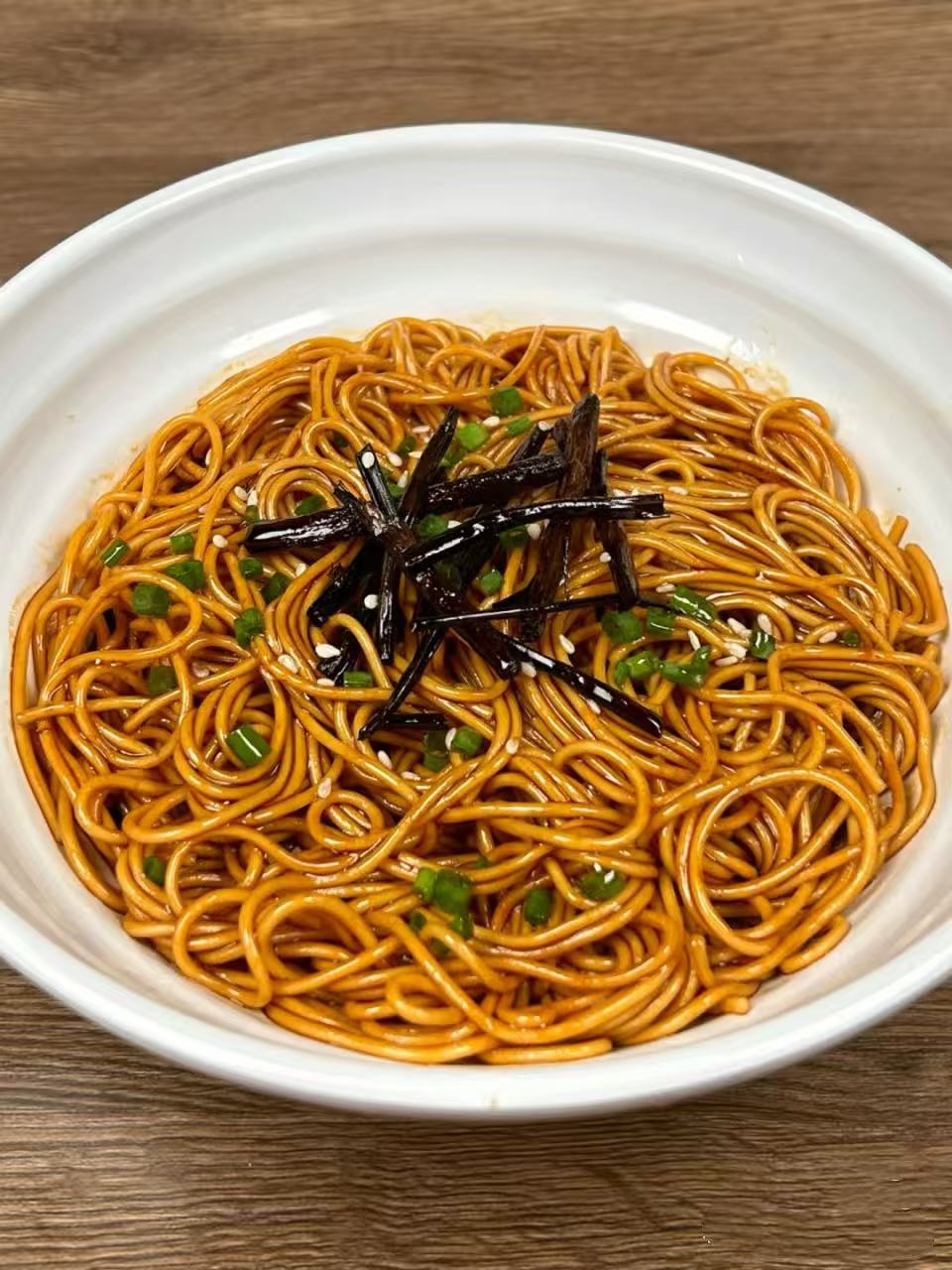
Scallion oil noodles—congyou banmian (葱油拌面, often simply 葱油面)—turn a short ingredient list into a satisfying Shanghai food stop. The noodles are tossed rather than served in a bowl of broth, and much of their character comes from fragrant scallion oil. This guide helps you recognise the dish, order a version that suits you and fit a noodle stop into a relaxed city day.
Chinese name
葱油拌面 · cōng yóu bàn miàn
Style
Noodles tossed with scallion oil and soy-based seasoning.
Useful distinction
Banmian means mixed or tossed noodles; do not expect a noodle soup.
What to ask
Portion size, toppings and whether dried shrimp or meat-based ingredients are used.
Planning tip
Choose a shop near the neighbourhood you already plan to explore.
Shanghai’s official food introduction describes a dish built around aromatic scallions, oil, soy seasoning and noodles that hold the sauce. The scallions are cooked until fragrant, giving the finished bowl a different character from simply adding raw green onion to plain noodles. Official Shanghai introduction to scallion oil noodles.
Look for the contrast between a glossy coating and the texture of the noodles. The dish can be quite simple to look at; its appeal is in the flavour and the way the sauce clings to each strand. A larger collection of toppings is not automatically a better version—start with a straightforward bowl if you want to understand the base dish.
How to enjoy your bowl
The official city guide recommends mixing the noodles so the scallion oil and seasoning coat them evenly. Sauce can collect below the first layer of noodles, so take a moment before judging the first bite. Shanghai’s 2026 guide to the dish.
Loosen and toss. Lift small portions with your chopsticks and mix from the bottom of the bowl.
Taste before adjusting. Try the balanced bowl before adding anything else from the table.
Keep the pace comfortable. Eat while the noodles are enjoyable to you, without rushing a hot bowl.
Order a sensible first portion. Leave room if you plan to try another snack later.
Ask for a spoon or another utensil if you need one. You do not have to use chopsticks perfectly to enjoy a local meal, and it is easier to ask at the start than struggle with the whole bowl.
Ordering and ingredients
Some versions include dried shrimp, while others add optional toppings. A plain-looking bowl is not proof that the recipe is vegetarian. Confirm the ingredients and any broth or seasoning used, particularly when a dietary requirement matters. The range of toppings is noted in the official city guide.
Say or show 葱油拌面 when ordering.
Check the number of portions and any extra charge for toppings.
If you prefer a simple first tasting, ask what is included in the standard bowl.
If avoiding meat or seafood, ask about the sauce as well as the visible toppings.
For dietary restrictions, let the restaurant confirm what it can provide.
For a more substantial meal, choose an additional dish that suits your appetite rather than automatically increasing the noodle portion. If sharing, decide whether to order separate bowls or request small plates.
Finding a noodle stop in Shanghai
The city’s 2026 food guide lists examples including Longtang Wonton House on Weihai Road and Cang Lang Ting on Sinan Road. Use these as starting points for research, not a promise of unchanged branches, opening hours or prices. Check the current location and menu before making a detour. Official guide and listed examples.
A convenient noodle shop near your sightseeing route can make a better stop than a long trip made solely for a famous name. Consider seating, your available time and what else you want to see in that area. If a shop is busy, keep another nearby option in mind instead of turning the queue into the main activity.
Pair noodles with a relaxed Shanghai walk
Treat the meal as a pause in your day. Explore one neighbourhood, sit down for noodles, and then continue with architecture, shops or another short walk. A noodle bowl is usually easier to enjoy when it does not compete with several consecutive tastings.
Shengjianbao are a different dish. Keep portions small if combining several Shanghai foods; image from SHOST’s media library.
If you want a contrast, read our xiaolongbao guide before planning a second stop. Steamed soup dumplings and a bowl of tossed noodles offer different textures, so there is no need to order everything at the same venue.
Common questions
Are scallion oil noodles always vegetarian?
No assumption should be made from the dish name. Ask the restaurant about dried shrimp, stock, sauces and optional toppings before ordering.
Is this the same as scallion pancakes?
No. Congyou banmian is a noodle dish. Scallion pancakes are a separate item, so show the Chinese name if the English menu is unclear.
Can I make this a quick food stop?
Yes, but allow for ordering, seating and any queue. Pick a shop near your route and keep the rest of the day flexible.
Explore Shanghai with a local host
For help combining neighbourhood walks and a food stop, view the Shanghai One-Day Private Tour. Tell Echo that scallion oil noodles are a priority so the venue, timing and any additional charge can be discussed. A listed local snack or light meal does not guarantee this dish or a particular restaurant.
Prefer a shorter or different arrangement? Browse local host services and describe your plans before booking.
Sources and update note
Information checked on 13 October 2026. The planning suggestions are editorial advice, not a fixed tour programme. Check current venue notices and menus before a visit.
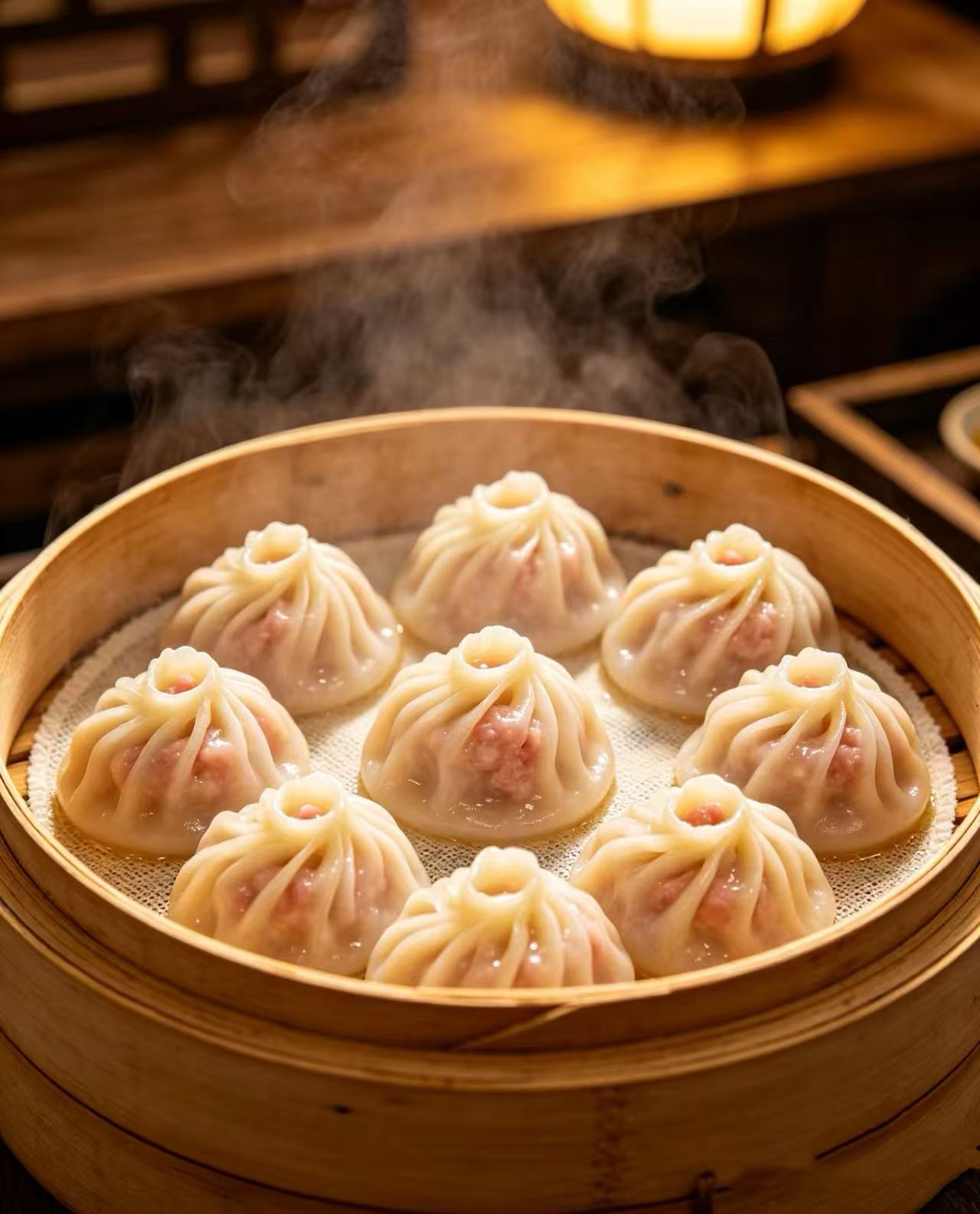
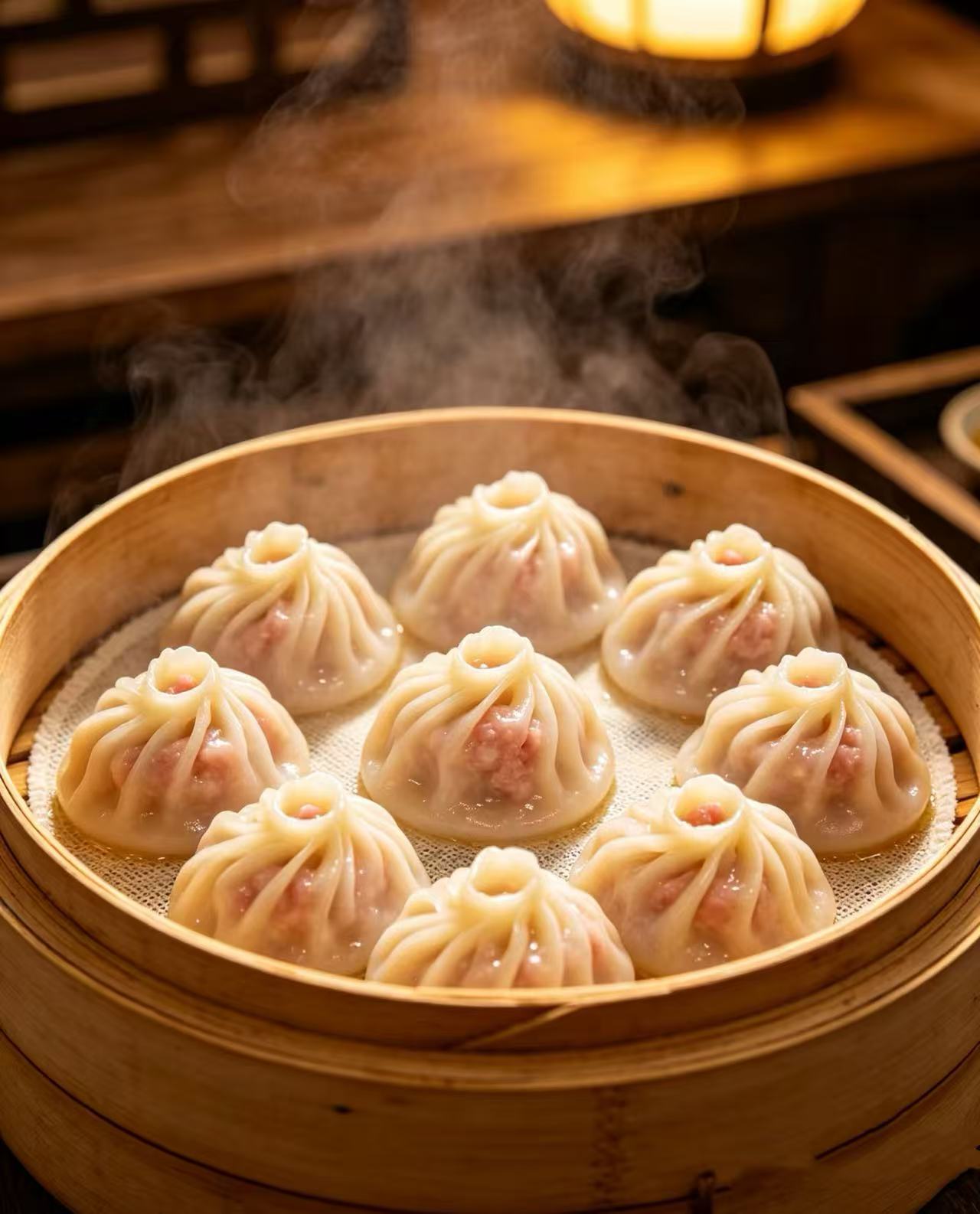
A bamboo steamer arrives at the table, the lid lifts, and a row of neatly folded dumplings appears. Xiaolongbao (小笼包) are one of Shanghai’s most recognisable food experiences—but the first bite is easier when you know what is inside and how to order. This guide explains the dish, a practical way to eat it and how to fit a tasting into a day exploring the city.
Start with the soup, not a large first bite
A freshly steamed dumpling holds hot broth inside a delicate wrapper. Place it on a spoon, release a little steam and let it cool before tasting. Take your time: the first basket is an experience, not a race.
Chinese name
小笼包 · xiǎolóngbāo
What it is
A small steamed dumpling with a thin wrapper, filling and soup inside.
Classic starting point
Pork xiaolongbao; check the exact filling and ingredients when ordering.
Common accompaniment
Chinese black vinegar and shredded ginger, used to taste.
Useful distinction
Xiaolongbao are steamed; shengjianbao are pan-fried buns with a crisp base.
The pleasure comes from three elements working together: a delicate wrapper, a savoury filling and broth enclosed inside. During steaming, the jellied stock in the filling melts into soup. Shanghai’s official culinary guide describes the Nanxiang style as a thin-skinned dumpling traditionally made with pork and jellied pork skin. Read the official culinary overview.
“Soup dumpling” means that the soup is inside the dumpling, rather than simply a dumpling served in a bowl of soup. MICHELIN’s dumpling overview makes the same distinction. Knowing this helps when you compare xiaolongbao with wonton soup or other dumplings on a menu.
Nanxiang, in Shanghai’s Jiading District, is closely associated with the dish. Shanghai’s official introduction traces the modern Nanxiang version to the nineteenth century. For visitors, the useful point is that this is a local food tradition with different makers and styles—not a dish that needs to be judged by one rigid ranking. The city’s introduction to xiaolongbao.
How to eat soup dumplings
Shanghai’s official food introduction recommends moving the dumpling gently onto a spoon, opening the wrapper and tasting the soup before eating the rest. The following is a practical version of that approach.
Prepare your spoon. Keep it close to the steamer so that a dumpling does not need to travel far.
Lift gently. Use chopsticks carefully and support the dumpling on the spoon. Avoid squeezing the wrapper.
Release the steam. Make a small opening in the wrapper and pause before sipping; fresh broth can be very hot.
Taste the soup. Sip carefully once it is comfortable to do so. A spoon also catches broth if the wrapper splits.
Finish the dumpling. Add a little vinegar and ginger if you enjoy them, rather than overwhelming your first taste.
You do not have to perform the process perfectly. If a wrapper breaks, keep the filling and broth on your spoon and continue. Ask for another spoon if sharing makes the table awkward, and let children’s portions cool before helping them taste.
Ordering your first basket
Start with one classic filling that everyone at the table understands, then decide whether to try another basket. Portion sizes vary, so check how many dumplings are included and whether the listed price is per basket or per serving. A small first order leaves room to compare another snack later.
Classic pork: a straightforward way to understand the balance of wrapper, meat and broth.
Crab or crab roe: ask exactly what the filling contains; a crab-labelled dumpling may also contain pork.
Vegetable or other fillings: do not assume the broth and seasoning are vegetarian solely from the name. Confirm with the restaurant.
Condiments: taste a dumpling before deciding how much vinegar or ginger you want.
If ingredients matter to you, describe the requirement clearly rather than relying on a photo menu. Ask about the filling, broth and shared preparation equipment. A host can help with the conversation, but the restaurant needs to confirm what it can provide.
Where to try xiaolongbao in Shanghai
Choose a location that fits the rest of your day. A famous name can be enjoyable, but a convenient stop with time to sit down may suit your visit better than crossing the city for a queue.
The Yuyuan and old-city area
Shanghai’s official food guide lists Nanxiang Steam Bun Restaurant (南翔馒头店) in the Yuyuan area as a longstanding example. This can be a useful food stop alongside old-city sightseeing. Confirm the current branch, menu and seating arrangements before going; the area is larger than the garden entrance alone.
Central Shanghai and neighbourhood options
The same official guide includes Jia Jia Tang Bao (佳佳汤包), associated with Huanghe Road, and Wan Shou Zhai (万寿斋) in Hongkou. These are examples to consider when planning a route, not a promise of current opening hours, a particular queue length or a fixed menu. Official Shanghai guide and restaurant examples.
Nanxiang as a separate excursion
If the history of the dish interests you, consider Nanxiang as a separate part of your itinerary rather than assuming it is next to Yuyuan. Shanghai’s official Nanxiang destination page is a useful starting point. Allow time for the journey and decide whether the outing is mainly about food, gardens or the old streets.
Xiaolongbao versus shengjianbao
Both are worth understanding when reading a Shanghai snack menu. Xiaolongbao give you a soft, steamed wrapper and enclosed broth. Shengjianbao are pan-fried buns, recognisable by their crisp base. They are a different eating experience, so choosing one does not mean you have tried the other.
For a simple comparison, try a small serving of each at separate stops and leave time between them. Focus on what you enjoy—soft wrapper, broth, crispness or filling—rather than trying to order every variation at once.
Shengjianbao are pan-fried buns: compare their crisp base with the soft wrapper of steamed xiaolongbao. Image from SHOST’s media library.
Build a relaxed Shanghai food stop
Pick one area that already fits your sightseeing route.
Choose a first basket and a drink before adding more dishes.
Leave a little time for a queue, ordering and letting the food cool.
Combine the stop with a short walk rather than several back-to-back meals.
Keep a backup nearby if the chosen shop is closed or too busy.
A dumpling tasting works well as one part of a city day. You can spend the rest of the time exploring architecture, markets or neighbourhood lanes, instead of making the whole itinerary depend on a single restaurant.
Common questions
Are xiaolongbao always made with pork?
Pork is the classic starting point, but menus may offer other fillings. Ask about the broth as well as the main ingredient, particularly if you avoid meat or seafood.
Are they a snack or a full meal?
Either, depending on the size of your order and what you add. Start modestly if you want to sample other Shanghai foods later.
Do I need to book a dedicated food tour?
You can enjoy a basket independently. Local support is helpful when you want help reading a menu, explaining preferences and fitting a food stop into a broader city itinerary.
Explore Shanghai with a local host
If you would like help combining local food with city exploration, view our Shanghai One-Day Private Tour or browse Shanghai private tours. Tell us that xiaolongbao is a priority so the possible food stop, restaurant and any extra cost can be discussed before booking.
A food preference is not an automatic inclusion
The Shanghai tour product lists a local snack or light meal, but that does not guarantee a particular restaurant or a xiaolongbao tasting. Confirm the dish, dietary requirements and any additional charge with your host before booking.
Sources and update note
Food and destination information checked on 12 October 2026. Restaurant examples come from the official city guide; check current branch details and menus when planning your visit.